Materials
Compare candidate processes with the geometry, volume and performance requirements. A forged or cast route may imply different tooling and design constraints, so the decision belongs alongside the drawing rather than in isolation.
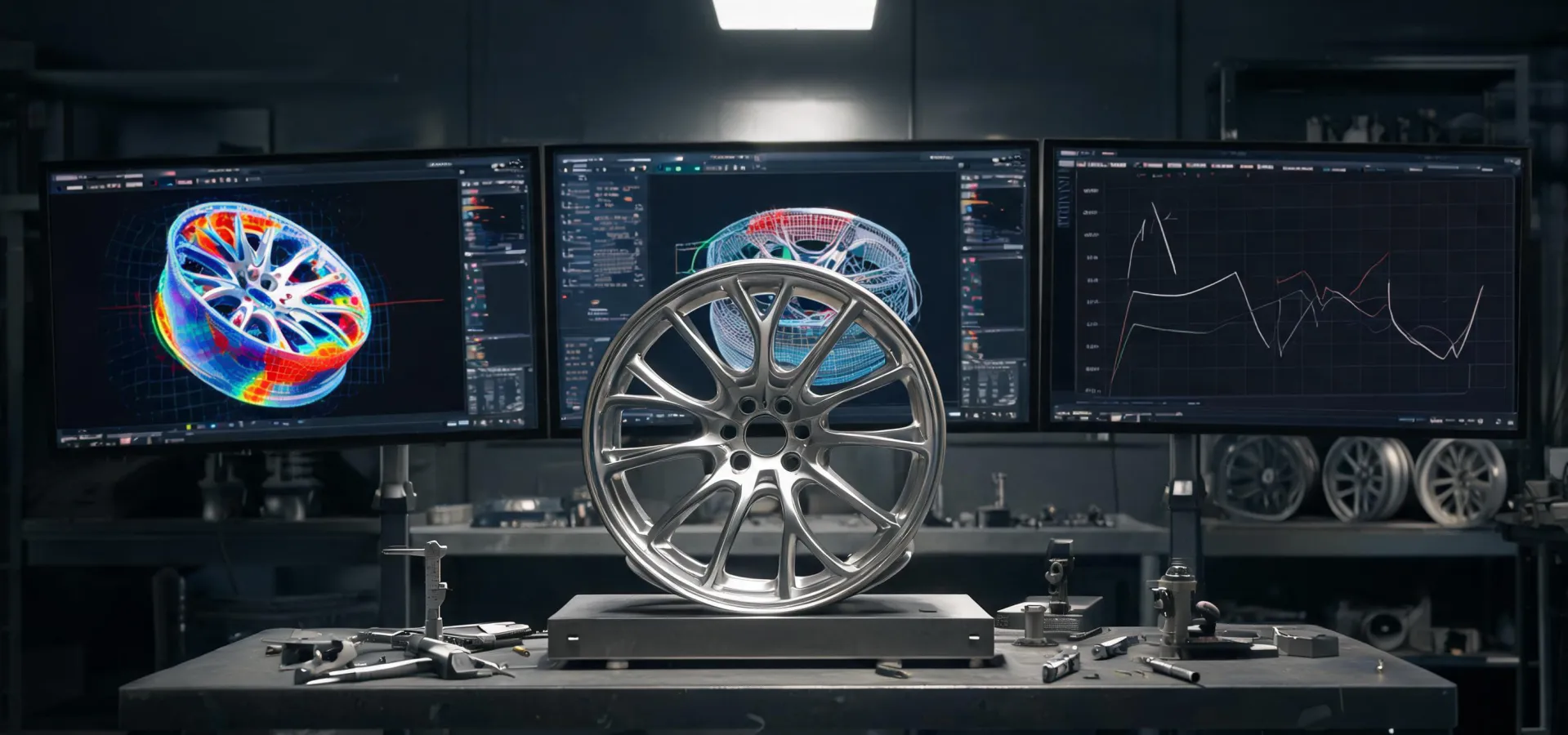
Materials, design and evidence belong in the same conversation.
Wheel design must connect visual intent with the constraints of a real vehicle. We approach each program as a sequence of decisions: establish the interface, select a suitable manufacturing route, review the design and agree on the proof required for release. The route from concept to a wheel that can be evaluated involves choices about the vehicle package, the manufacturing method and the way results will be reviewed. Our aim is to make those choices visible to the people responsible for the program.
Compare candidate processes with the geometry, volume and performance requirements. A forged or cast route may imply different tooling and design constraints, so the decision belongs alongside the drawing rather than in isolation.
Use a controlled model and clear assumptions to identify questions for physical testing. Models help frame a discussion, but their load cases and material assumptions should be examined before conclusions are carried forward.
Link measurements and test results to the product revision and duty profile. Evidence is most useful when the sample, procedure and acceptance criteria are recorded and can be matched to the actual application.
Establish the vehicle, market and procurement boundaries.
Review the drawing and wheel-end packaging.
Evaluate samples against an agreed test plan.
Record changes and communicate their effect on evidence. A revised geometry or process may require a new review of the assumptions and previous results. Recording why a revision was made also helps the next reviewer understand the limits of an earlier assessment and the questions still open.
Programs involve vehicle engineers, purchasing teams, manufacturing specialists and test partners. Their responsibilities vary by project; the scope, deliverables and evidence are agreed for each engagement.
Technical alignment is most useful when decisions can be traced to a drawing revision and a defined operating context. Ask the team which documents are available for the wheel and target market under consideration. Procurement and engineering teams may need different details, but both benefit from a shared definition of the product and its intended use. We encourage early discussion of unresolved interfaces, documentation and approval scope.
Tell us which design and verification decisions are still open.
Discuss your project